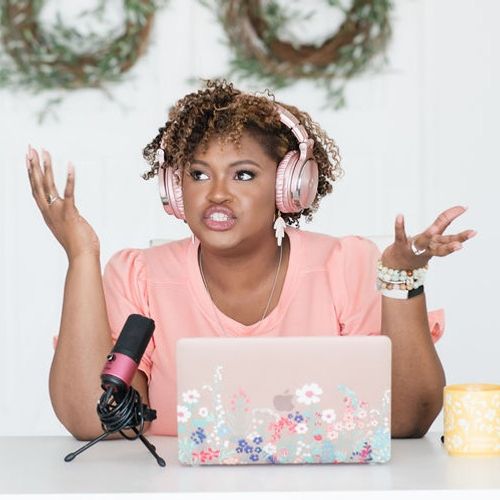
Episode 233
How Your Caregiving Experience IS Business Training (Stop Undervaluing It) | Julie Cole
What would it look like to build a multi-million dollar business while raising six kids, advocating full-time for a child with autism, and navigating everything that nobody put in the business plan?
That's exactly what Julie Cole did, and she didn't do it by following the standard playbook.
Julie is the co-founder of Mabel's Labels, a brand she started almost 23 years ago with her sister and two college friends when her eldest son was diagnosed with autism at three years old. She left a career in law, started making labels in a basement at 2am, and built something real, not because the timing was perfect, but because she figured out what her actual capacity was and built around that.
In this conversation, Julie and Nikita get into the conversation most business advice skips entirely: what actually has to shift when you're a mom, a caregiver, and an entrepreneur all at the same time, and why the skills you're already using at home are more valuable than you think.
In This Episode, You'll Learn:
- Why capacity is the first conversation, not the last: before strategy, before offers, before anything else, you need to know what you can actually carry and Julie's story shows exactly what happens when you get honest about that first
- How the skills you're already using as a caregiver translate directly into business: advocacy, research, negotiation, flexibility under pressure — these aren't soft skills, they're the exact skills that build something sustainable
- Why entrepreneurship gets romanticized and what the real version looks like: Julie is direct about what those early years actually looked like, and it's not TED talks and wine nights
- How building a values-led company culture protects both your business and your life: From results-only work environments to neurodivergent hiring, Julie built a company that worked for real humans living real lives
- What the "care gap" actually means for women entrepreneurs: Whether or not you have kids, the invisible load is real, and building a business that pretends otherwise is building on a weak foundation
- Why visibility creates credibility, which creates loyalty: Showing up — even when life is heavy, even when the pace feels impossible — is not about hustle, it's about trust
⭐ Enjoyed this conversation? Leave a review and share it with another mom who's building something — she needs to hear this one.
Leave us a Review and share this episode with a friend.
Products We Love + Special Guest Gifts → Want to support the show and treat yourself? We’ve created a quick-access list of products I personally use and love, exclusive savings from podcast guests, and other gems that can help you live well and do business with chronic illness. Explore our faves + savings here!
Join our Community Channel Here.
Transcript
Nikita Williams (2): If you're a woman
in business feeling like your personal
2
:responsibilities pull you away from
entrepreneurial success or that your
3
:real-life skills that you've experienced
or accumulated over time do not translate
4
:to the bottom line or to your corporate
ladder, then this episode is for you.
5
:I'm joined by Julie Cole, lawyer
turned label maker, entrepreneur, and
6
:mom of six who reveals how the skills
honed in caregiving are not just
7
:transferable but actually foundational
to building a successful business.
8
:We challenge the idea that
your business must be separate
9
:from your life experience.
10
:Listen for how caregiving develops
critical skills while integrating
11
:your life and business creates
better company culture as Julie
12
:shares from her company and how to
stop undervaluing your unique path.
13
:So stay tuned.
14
:Are you tired of hearing business
advice that completely ignores what
15
:real life looks like when you're
navigating chronic illness, autoimmune
16
:disorders, flare-ups, medical
appointments, and just life life-ing?
17
:Business with Chronic Illness is for
entrepreneurs who know they're capable
18
:of building something meaningful,
but need a way to do it that actually
19
:works with their body, not against it.
20
:This podcast brings you honest
conversations with founders, CEOs, and
21
:other bosses, sharing their strategies,
adaptations, and lessons they've
22
:learned while building businesses
alongside chronic illness, including
23
:what worked, what didn't, and what
they wish they had done differently
24
:before burnout forced the lesson.
25
:I'm your host, Nikita Williams, a globally
ranked podcast host and entrepreneur
26
:who's built my business while navigating
chronic illness and helping others do
27
:the same without sacrificing themselves.
28
:I created this show to open up the
conversations most business spaces avoid.
29
:The promise of Business with Chronic
Illness is simple: to show you that
30
:you can build a thriving business
with chronic illness and autoimmune
31
:disorders without sacrificing your
health, your peace, or your profit.
32
:You're not behind, you're
building differently, and
33
:you're in the right place.
34
:I am super excited to
have Julie on the show.
35
:We are going to be talking about a very
important topic, which is caregiving.
36
:Caregiving and what does that look
like as an entrepreneur, as a mom,
37
:as a, as a wife, as a person, and
you're taking care of somebody else.
38
:So Julie, I know you have
so much experience in this.
39
:I know this is part of
your own personal story.
40
:Please share with us, where
does this look like for you?
41
:Where did this caregiving aspect of
approaching business come into your life?
42
:Julie Cole: Yeah.
43
:So it's interesting, you know?
44
:Like, you think often women particularly
start businesses for very, you know,
45
:different reasons, and often it is
lifestyle, and for me, that was the case.
46
:And it's like you, you know, needed
some more flexibility, and for me,
47
:that came as a result of my eldest
child being diagnosed with autism.
48
:So originally, I joke that
I'm a recovered lawyer.
49
:Um, so the...
50
:So my business, Mabel's Labels,
I started it with three...
51
:Actually, my sister and two
of our friends from college.
52
:And Mabel's Labels started
for a couple of reasons.
53
:One was, like I said,
my son was diagnosed.
54
:He had only just turned three.
55
:The research told me that, you know,
if one parent really commits and we do
56
:all the early intervention and we work
really hard, then one day he might move
57
:out of my house, which is my end goal.
58
:And, um, so there was that, like, just
wanting to be able to provide for him,
59
:advocate for him- Yeah ... get him to
his sessions, all that sort of thing.
60
:And life in the traditional workforce
is not necessarily suited for
61
:women, moms who want to do that,
or any parent for that matter.
62
:It just usually does fall
on us, let's face it.
63
:So true.
64
:That's just facts.
65
:So that's when, you
know, I went to the gals.
66
:I said, "Look, we've had this really
good idea for a business, and,
67
:you know, Mac just got diagnosed.
68
:One was on a mat leave."
69
:Like, everybody was kind of
all over the place, and we're
70
:like, "Well, let's just do it."
71
:So we started doing our
research and development.
72
:So it really was the two things, you know,
the, the lifestyle and having a good i-
73
:idea and bringing, bringing that together.
74
:So, um, yeah, it was the
flexibility I was looking for.
75
:And also, you know, he is my eldest child.
76
:He had only just turned three.
77
:He already had two younger siblings.
78
:I have six kids.
79
:So it was a very busy household
As it was with or without autism.
80
:Nikita Williams (2): Wow.
81
:I mean, all of those things
add texture to business advice.
82
:I think it adds a filter to what decisions
you decide to make, who you decide to work
83
:with, and I know a big part of your story
is community, support, building founders.
84
:How did that shape the way that
you structured your business?
85
:Julie Cole: Yeah.
86
:I think for us, like, it was pretty
unique having four co-founders.
87
:And for anyone out there who has a
business and maybe has one partner,
88
:you're probably going, "What?"
89
:"Is that like...
90
:That is craziness having four."
91
:Because of course you have lots of
ideas and lots of opinions and lots
92
:of feisty conversations, but you
also have four different brains-
93
:Nikita Williams (2): Mm
94
:... Julie Cole: four different skill sets.
95
:You have division of labor, so, you
know, I didn't have to do it all.
96
:Mm.
97
:You know, one person could be
like, "Okay, I'm gonna research
98
:this machinery, and I'm gonna talk
to the bank, and I'm gonna do..."
99
:So we could really divide and
conquer, and also that we were
100
:able to provide each other...
101
:Because especially 20, almost 23
years ago when we started, long
102
:before podcasts and social media, the
entrepreneurship grind was very lonely.
103
:Mm.
104
:So, and I saw this with my solo
entrepreneur friends, particularly
105
:in the mom entrepreneur space.
106
:You know, they're working out of
their basements or their garage or
107
:on a laptop somewhere, and it can be
a lonely, it can be a lonely space.
108
:So for the four of us as well, we were
able to provide each other with support.
109
:We were able to divide risk financially
by us all contributing, which felt
110
:a little more comfortable as well.
111
:But also the fact that this was,
like, my sister- Mm ... and our
112
:two friends who actually ended up
marrying my brother, and I have a
113
:young uncle, so we were all family.
114
:Oh.
115
:So they also were aligned with- Mm
116
:wanting the best for my son, right?
117
:Yeah.
118
:And wanting the best outcome, so
understanding the reason I made,
119
:you know, the leap from traditional
workforce to entrepreneurship.
120
:And, uh, like you say, like built,
it was like a built-in community-
121
:Mm ... when back in those days,
there were no online communities.
122
:There might be, like, awkward
in-person events sometimes-
123
:like with your local chamber of commerce.
124
:But again, that stuff was very
hard because, you know, when you're
125
:raising a, a young family, getting
out to go to do that sort of
126
:thing can be, can be really tough.
127
:So it was like, you know, building our
own community and then, of course, like,
128
:that just, you know, women founders, we
just, you know, kept building community.
129
:We ended up with a huge, like, you
know, online presence and, you know, I,
130
:I was a mom blogger from the way back
days and a huge, you know, following
131
:on social media when, once that hit.
132
:So we just brought that community from
the four of us to the entire company,
133
:and it just became our company culture.
134
:Nikita Williams (2): I love hearing
that because I think- Often, you know,
135
:I started my business back in 2017
online, and we did have social media.
136
:We did have Facebook.
137
:We did...
138
:We didn't have Instagram yet, but
we did have Facebook, and so there
139
:was this kind of built-in ability
to connect with people in different
140
:ways that you weren't used to.
141
:But I think even still today when
I talk to women, there's resistance
142
:around having that support system.
143
:I wonder for you what felt like, if
there was anything, what felt like
144
:the hardest thing to kind of- Yeah
145
:figure that aspect out in being
a mom, taking care of this new
146
:situation that you're still trying to
figure out, it's very new, and then
147
:bringing in other people and their
situations, even though they're family.
148
:What felt like the hardest thing?
149
:Julie Cole: Yeah, I think, you know,
for a lo- there's a, there's a few
150
:things at play, I think, in those
early days of entrepreneurship.
151
:And, and I, I'll say this as a
warning for those who are like,
152
:"Oh, I've got a great idea."
153
:I, I do think entre- and I'm sure you
can attest to this, entrepreneurship
154
:tends to get romanticized a bit.
155
:Ugh, yes.
156
:And, you know, everyone thinks it's gonna
be like TED Talks and getting invited
157
:on your podcast and, and book, you know,
speaking events and stuff like that.
158
:But, uh, you know what?
159
:I, I have to say, I do a lot of that
now, but back in the day, it was a lot
160
:of, you know, putting the kids to bed,
going to my sister's basement, making
161
:labels till 2:00 AM, getting up at 6:00
AM with the kids and doing it all again.
162
:So the...
163
:it was, you know, it wasn't like,
you know, putting the kids to bed,
164
:grabbing a glass of wine, hopping
on Netflix and chilling out.
165
:Like, you know, it was a real struggle, so
you had to manage your own expectations.
166
:And then I think also if you have a f-
a family like a spouse or, you know,
167
:children, you have to manage theirs
too, 'cause they need to understand,
168
:look, we might not be going on holidays.
169
:Like this is feast or famine, right?
170
:Mm.
171
:Like, this is...
172
:We might not get the new car.
173
:We ha- we'll have to make
decisions around our new situation.
174
:So I do think before anyone
goes into this, one of the hard
175
:things can be is actually knowing
what entrepreneur looks like.
176
:Mm.
177
:And it doesn't look like what a
lot of people think it looks like.
178
:It is not glamorous.
179
:And, you know, that financial
piece too, like you really
180
:have to know your finances.
181
:Mm.
182
:You gotta know what you're going into.
183
:You gotta know where you're
getting the money from.
184
:How are you gonna budget this?
185
:How is it gonna make sense?
186
:Can you do it?
187
:Do you have the capacity?
188
:Do you have a business plan?
189
:Can you work together?
190
:I do think you made a good point that
sometimes asking for help is hard and, you
191
:know, we don't wanna do these things, but
I actually think women are better at this.
192
:And I think for me, having
that partnership group, we
193
:were just like, "Who cares?
194
:We don't care if we look dumb.
195
:I'll ask anything."
196
:And I've said this to
my kid, "Nos are free.
197
:Just ask- Mm ... 'cause the worst
that's gonna happen is they'll say no."
198
:So, you know, we all,
we used our networks.
199
:We made sure, you know,
we know somebody in CPG.
200
:We know a IT nerd who
can make us a website.
201
:Mm.
202
:We know...
203
:Like, we do know these
people, so go out and ask.
204
:So I, I think those early
challenges really are about, like,
205
:understanding the lifestyle change- Mm
206
:understanding, you know, the, the
economics of it, the how are you gonna
207
:finance it, how are you gonna plan it,
and how are you gonna fulfill it too.
208
:Because I...
209
:Another thing I do find with
entrepreneurs- Is, you know, we're really
210
:great at the early stuff, you know?
211
:Mm.
212
:But then our ADD kicks in.
213
:Because it's huge in the
entrepreneurship community, so then
214
:the follow-through and the process.
215
:So we like that early
scrappy startup stuff.
216
:Soon as we've got spreadsheets
around us, not so much.
217
:Mm-hmm.
218
:So, you know, if you don't have that, if
you're not great at process, you're not
219
:great at following through, make sure you
hire somebody or partner with somebody
220
:who has skills that you don't have.
221
:Nikita Williams (2): Yeah, and
you know, that, you made me think
222
:about while you were talking about
that in business, I feel like
223
:that is the case with caregiving.
224
:Like, I feel like you have to
do the same thing in the way you
225
:care, and I can imagine with your
son, you know, there's the...
226
:You kind of developed those skills in, in
that space that can translate into yours.
227
:So what did that look like for you?
228
:Julie Cole: I 100% agree with
what you just said there.
229
:I gotta tell you, like, I was, I
was just thinking today, and I do
230
:think about this often because, you
know, when I, when the business was a
231
:startup 23 years ago, so was my family.
232
:You know, I had a bunch of little babies.
233
:Nikita Williams (2): Yes.
234
:Julie Cole: A- and, and now, like, you
know, we've gone through that growth,
235
:and, like, every time, whether it was
with my family, with the children, or
236
:with the business, I thought I knew what
I was doing, there would be a change.
237
:Suddenly, you know, we have
eight employees, so we need to,
238
:uh, know something about HR.
239
:And then suddenly I'm like, "Oh,
wait, they're not babies anymore.
240
:Now they're in school.
241
:Now I know, I gotta know about school-age
things and, and look up where they can
242
:play ice hockey and things like that."
243
:So as soon as you think
you know what you're doing,
244
:whether it's with your family-
245
:Nikita Williams: Mm
246
:Julie Cole: and your caregiving
or your business, it all just...
247
:I'm always like, "Just get comfortable
being uncomfortable," 'cause as soon
248
:as you think you got it, something's
gonna change, and you're gonna have
249
:to relearn, make new connections,
especially with caregiving.
250
:I mean, you know, especially, like,
your kid ages out of a certain care,
251
:and then you're like, "Oh, my gosh,
I, I can't have that pediatrician.
252
:I can't go to that children's hospital
anymore," all of these things.
253
:And we get attached.
254
:I mean, you know this.
255
:You get attached to your people.
256
:You get attached to your educators.
257
:Like, when my son had to start high
school, I'm like, "But, uh, you
258
:know, I've worked so hard on these
relationships with the educators, and
259
:I've invested so much, and now I have
to start over, and where do I want him
260
:to go, and who's gonna be the best fit?"
261
:And it's like research is a full-time job.
262
:Oh.
263
:Advocacy is a full-time job.
264
:And, you know, like, I know my son
was getting what he needed because
265
:they didn't wanna see this ugly mug
walking in the office every day saying,
266
:"Why isn't he getting what he- he's
entitled to 'cause here's the Education
267
:Act-" Mm ... "and this is what..."
268
:You know, like, also a lawyer mom, right?
269
:Yes.
270
:So I was
271
:Nikita Williams (2): like, and also,
I was like, also- Yeah ... yeah,
272
:she's a lawyer, so she knows what
273
:Julie Cole: she's talking about.
274
:Nikita Williams (2): Yeah, yeah.
275
:Julie Cole: Yeah.
276
:And that's it.
277
:But it is, like, uh, like, to do the
research to know how to advocate- Mm-hmm
278
:... and to take the time to be able to go
to all the school meetings, all the
279
:appointments, that's the flexibility and
the thing with caregiving that you need.
280
:Nikita Williams (2): Yeah.
281
:It is so amazing that we don't
realize how much those skillsets as
282
:women translate to our businesses.
283
:I find that a lot of women I speak
to often in these conversations,
284
:they're like, "You know what?
285
:You're right.
286
:That does he- that did help me here.
287
:That did help me-" Yes ... "lay this
groundwork, think about it a way."
288
:And I think I like to bring this
aspect out in conversations because
289
:there are people listening, there
are women listening that are li-
290
:hesitant because they feel like they
don't have that corporate background,
291
:or if they do, they don't have it
in the way that they wish they had.
292
:But the very aspects of what you're
doing at home and what you have done to
293
:support your community, your people, are
the skillsets that I believe, especially
294
:even more so as we go into AI and
everything that's coming in the world,
295
:that is actually the things that are
gonna mean the most important thing ever.
296
:Julie Cole: 100%.
297
:Nikita Williams (2): You know?
298
:Julie Cole: 100%.
299
:Yeah, I totally agree.
300
:And I think also, because, you know,
I did for that hot minute go, "Oh
301
:God, why did I put myself through law
school- ... and do articles and do this?
302
:And it was so hard, and wah, wah, wah.
303
:And now all I do is make
labels and change diapers."
304
:But I gotta tell you, like,
we have to remember that.
305
:And I mean, that's why
I say recovered lawyer.
306
:It's kind of tongue in cheek, right?
307
:Like, you know, because why I
say that is because we don't know
308
:where the path is gonna take us.
309
:Mm.
310
:We don't know what's gonna happen.
311
:We don't know if we're
gonna get a chronic illness.
312
:We don't know if we're gonna have a child
with, you know, who, who's neurodivergent.
313
:We don't know if...
314
:We don't know.
315
:There's no crystal ball.
316
:And all of the things, you
know, that bring us to that
317
:windy path are not for naught.
318
:They're important.
319
:Everything I learned at law school, I
could bring negotiating with these six
320
:kids, and also, you know, to my business.
321
:So I always say, like, don't
feel like you've wasted...
322
:Like I, I even say to my kids,
I've got five in college right now.
323
:Buy more labels, everyone.
324
:Like, th- I, like, 'cause they
worry about what am I gonna do?
325
:What am I gonna do, right?
326
:What am I gonna be when I grow up?
327
:I'm like, jobs when you get out of
college are gonna be completely different.
328
:Did anyone know what AI was
when I was studying law?
329
:No.
330
:Did anyone know what, like, a
community manager was or, like, a,
331
:you know, a social media manager
was when I, when people were
332
:studying marketing 20 years ago?
333
:No.
334
:I'm like, just study what you
like, learn, and take those skills,
335
:and they'll be transferable.
336
:So don't ever regret the path,
even if you land at that, at that
337
:windy one you weren't expecting.
338
:Nikita Williams (2): So true.
339
:So I wanna shift us for a
minute, because we know that
340
:your life affects your business.
341
:I personally think this.
342
:I think business is personal in every way.
343
:I don't care if you are not...
344
:If you don't think that,
I don't know what's...
345
:Anyway.
346
:Julie Cole: What life are you living?
347
:Not mine.
348
:Nikita Williams (2):
I'm like every- Not mine
349
:aspect of business affects a human or
a person or a community, whether we
350
:want to, like, realize that or not.
351
:And so in what ways have that personal
aspect of your business really shaped
352
:the relationships, the partnerships,
the, the technology, the, the things
353
:you are choosing to use in your
business, and how does that really work?
354
:Like, people feel like you cannot
be personal in your business.
355
:It just has to be business business.
356
:What does that look like for you?
357
:Julie Cole: Oh my gosh, I have
so much to say about this.
358
:I mean, I'm with you,
business is personal.
359
:Like to me, b- my, like Mabel's
Labels is a, is a lifestyle.
360
:Like right now- Mm-hmm ... it's
actually a holiday where I am.
361
:But I mean, I'm like, if I can hop
on a podcast with you, I'm going to.
362
:Like this is...
363
:But then maybe tomorrow, like I
don't plan on going to the office.
364
:Right.
365
:Whatever.
366
:Yeah.
367
:You know?
368
:Like we, it's a, it's a lifestyle
and I think, you know, for us,
369
:one of the beautiful things about
starting your own company is that
370
:you can also start a culture.
371
:Nikita Williams: Mm.
372
:Julie Cole: A company
culture that you like.
373
:And we knew when we started this company
that we could work at weird times and in
374
:weird places and be highly productive.
375
:Mm.
376
:So we built a company around that.
377
:No parent at our work has to like pretend
they're sick because they wanna go to
378
:watch their kid in a Christmas play.
379
:Go, tell us about it.
380
:Mm-hmm.
381
:Like, nobody minimizes their Facebook.
382
:Like, just as long as you're getting
your work done, we don't care.
383
:Uh-huh.
384
:You know?
385
:Just we put productivity above
everything else, and not presenteeism.
386
:Mm.
387
:And I think, you know, the way
that kind of innovation has been
388
:brought to our products, you know,
creating a new product, has also
389
:been brought to our workplace.
390
:Mm-hmm.
391
:So we have a very happy workplace.
392
:Mm-hmm.
393
:We have...
394
:And when people are happy at work, and
you give them flexibility, and they
395
:just focus on their productivity, I feel
like they're also very entrepreneurial.
396
:Mm.
397
:Which means they feel like
they have skin in the game.
398
:They are also, for even like, especially
the tech people, if you give them,
399
:if you bake in time for them to play
around in their tech worlds- Mm-hmm
400
:then your business inevitably does
better, 'cause they figure out
401
:a better way of doing something,
or they make a contact that can
402
:help with this system or whatever.
403
:Yeah.
404
:And it's really important, A,
to keep them happy, and, and B,
405
:it's, it's good for your business.
406
:So I think by, you know, having a
really innovative products and having
407
:a really innovative workplace based
on- You know, business is personal.
408
:Mm-hmm.
409
:And valuing relationships and
baking that right into our core
410
:values, and core values that aren't
just, like, hanging on a wall.
411
:Like, we interview by them,
hire and fire by them.
412
:These are the things.
413
:So that's why we just, you know, from
a business perspective, we don't have,
414
:um, we don't have a lot of turnover.
415
:Mm.
416
:People like, you know, like working with
Mabel's, and it, it's, it's just a lot
417
:of fun in it's a very special place.
418
:And everyone's valued.
419
:And the other thing that's really
important too is that, you know,
420
:having a child on spectrum, we do
a lot of neurodivergent, uh, hires.
421
:Oh.
422
:So, like, a lot of our su- summer
students are neuro-spicy, and
423
:they do a great job, and we try
to be inclusive in all the ways.
424
:Mm-hmm.
425
:So, um, I think when you bring that
kind of leadership, and I, I think women
426
:often do bring that kind of leadership.
427
:Yes.
428
:We know women leaders and women
entrepreneurs are more philanthropic.
429
:They have more inclusive workplaces.
430
:There's a higher level of work
satisfaction in the workplace
431
:when there are women leaders,
and that's not for no reason.
432
:Nikita Williams (2): And it is
so true because we understand
433
:the complexity of living, right?
434
:We are s- cyclic kind of people.
435
:We have ups and downs.
436
:We have great days.
437
:We have bad days.
438
:We have kids that have those days.
439
:We have family.
440
:We have parents that we're taking care of.
441
:There's all of these complexities
in the way that we have to
442
:just show up in our own lives.
443
:And so for us to build businesses
as if those things don't exist
444
:is kind of just masculine.
445
:Julie Cole: Yeah, exactly.
446
:You know, like- Right?
447
:It's, it's- ... it's exactly what it
is, and you gotta remember, like, this
448
:w- this traditional workforce that we
left because it kinda pushed us out.
449
:Mm-hmm.
450
:It's because it was built around
men working during the day.
451
:Well, they had a full-time human
adult at home taking care of all
452
:of the things- Yeah ... right?
453
:And it doesn't suit families today.
454
:And because of the care gap in
that women are doing most of the
455
:caregiving, we are the default parent.
456
:We do carry the invisible load.
457
:And even for women who are non-parents,
we still see that care gap.
458
:They're taking care of the pets.
459
:They're taking care of the neighbor.
460
:They're taking care of elderly parents.
461
:They're taking care of their
nieces and nephews, their best
462
:f- their godchild, whatever.
463
:We still see that care gap
for women who are not parents.
464
:Yes.
465
:So, a- and it's funny too, like, when
you mentioned, you know, elderly, I
466
:even feel like, okay, wow, now my kids
are like, oh, I can take a breath.
467
:A f- like, a lot of them are at
college, and they're very independent.
468
:So then what happens when
your kids are that age?
469
:Your parents are elderly- Yes ... when
your kids are that age, and they, you just
470
:go from one kind of caregiving to another.
471
:Yes.
472
:So it's like we don't ever get a
break- Yeah ... until that time comes
473
:when our kids are taking care of us.
474
:Nikita Williams (2): Yeah.
475
:To that point, though- What have you,
Julie, h- found to fi- and there's
476
:a, there's so much talk around the
world right now about work/life
477
:balance and harmony and work/life.
478
:That's not a thing specifically within,
like, bigger corporations and companies.
479
:I have my own feelings about it, but I'd
be curious to hear about, like, what type
480
:of business decisions have you directly
had to make differently because of the
481
:type of caregiving you are giving to your
family, to yourself, that's probably,
482
:you know, I don't know, somebody on,
you know, some place that's looking
483
:in going like, "That is a bad business
decision," has proved to be a good
484
:decision for you and for your business?
485
:Julie Cole: Well, we know it has
because we, you know, we for many years
486
:did a results-only work environment,
and we still philosophically do that.
487
:Mm.
488
:And so it's good for the business as
far as, like I said, like retention.
489
:It's been good for my family
because of the flexibility.
490
:Certainly, you know, there's
been lots that's been given up
491
:from, like, a pre-Mabel's, but
I mean, it can't be argued.
492
:Mabel's Labels is wildly successful.
493
:You know?
494
:Like, we do millions and millions a
year in, in business, so you can't
495
:fight the bottom line on this.
496
:So you know, uh, for a few moms
who started a, a label company in a
497
:basement, we showed that this is, this
is workable if you do it smart, if you
498
:plan, if you, you know, do it your way.
499
:You don't have to do it like the guys.
500
:You do it your way.
501
:Nikita Williams (2): Yeah.
502
:Julie Cole: And we've
shown you that you can.
503
:But there's a real problem because
a lot of women, I feel like even
504
:for me, being able to leave law-
505
:Nikita Williams (2): Mm
506
:... Julie Cole: and start a business
came from a place of privilege.
507
:Nikita Williams (2): Uh-huh.
508
:Julie Cole: You know?
509
:I was able to do that.
510
:I mean, it was tough-
511
:Nikita Williams (2): Uh-huh
512
:Julie Cole: but I was able to do it.
513
:And you know, we don't talk about the
privilege of being raised by parents who
514
:self-regulate and, and tell you you're
smart and encourage you to be educated.
515
:And so, I mean, I had
so much going for me.
516
:I wasn't that brave.
517
:I never thought I couldn't do things.
518
:Oh.
519
:So you know, there's a lot of
privilege in entrepreneurship
520
:that people also don't realize.
521
:I mean, you think about, like, you
know, the Kardashians making lipstick.
522
:Well, everyone's gonna buy it 'cause
everyone knows their name- Yeah ... and
523
:they have the money to invest in it.
524
:Uh-huh.
525
:Right?
526
:So wealth creates wealth.
527
:We know that.
528
:Mm-hmm.
529
:Right?
530
:So I think, you know, that's,
um, that's just, just kind
531
:of, kind of the reality of it.
532
:But we know for women, the number of
female-owned companies that make over
533
:$100,000 a year in sales is less than 2%.
534
:Mm-hmm The amount of funding-
535
:Nikita Williams (2): Oh
536
:... Julie Cole: women startups
receive from VC is less than 2%.
537
:Uh-huh.
538
:And when you go to sell your
company, women are leaving
539
:a lot of money on the table.
540
:Mm.
541
:Women are not getting in their
exits what the men are getting.
542
:So we're seeing this systemic thing that
happens, which means we're not getting
543
:the funding, which means we don't grow
our companies, which means we can't
544
:sell our companies for the big numbers.
545
:So we see that this is just
a cycle that's repeating.
546
:So we need to, like, enough of the fluff.
547
:We need, like, men, VCs
investing in our companies.
548
:Where we're getting money now is,
like, when a woman sells her company
549
:for a bazillion dollars, she's, you
know, giving money to women startups.
550
:So we need more of that in the pipeline.
551
:We need to make, you know, a, a, a, a
have in the boardrooms, like, "Don't
552
:interrupt me," or, "She was speaking."
553
:Mm.
554
:Or, "Actually, don't hijack her idea."
555
:There are all these micro-feminisms
that we need to bring to the workforce.
556
:And as, like, somebody who starts
a business and provides an en-
557
:you know, creates an environment
like that, it's, it's quite nice.
558
:Nikita Williams (2): Oh, I love
how you just said, "Quite nice."
559
:It's
560
:Julie Cole: quite nice.
561
:Nikita Williams (2): So Julie, when
we pull back the camera a little bit
562
:for you, if you were to go back, i-
and this, very rarely do I get to talk
563
:to so many, like, to a person that's
started a business way before what we
564
:see in the social space now, right?
565
:A lot of the...
566
:Even now, I feel like just the fact of
social media, there's a lot of privilege
567
:in the fact that we can literally start
a business tomorrow if you don't have
568
:one, and have, you know, 500 people
find you, and it's so much easier than
569
:years before the life that we live now.
570
:However, with that speed, with that,
you know, expectation, and you've talked
571
:about this throughout the episode about
putting some real grounded thoughts
572
:around how you show up and build
whatever you're building, or continue
573
:to build whatever you're building.
574
:How have you maintained, and I don't
even wanna get to that p- part first.
575
:I wanna know the nitty-gritty for you as
a bu- Business owner, founder, uh, just
576
:an amplifier of what you've created.
577
:Say to a woman who isn't with that
privilege, who isn't necessarily
578
:around for people that can potentially
become their founders- Right
579
:co-founders or have that income, or
they are in a corporate environment and
580
:they're not sure how to transition into
that, and they are taking care of, you
581
:know, someone with chronic illness or
neurodivergent spicy or elderly parents.
582
:What are the things that you feel like
they need to focus and simplify on
583
:to give them the, the roadway, give
them the roadway to build something?
584
:Right.
585
:Julie Cole: Well, I
think it's interesting.
586
:Like, I think, you know, a lot of women
do have kind of their side hustles,
587
:and we saw through COVID women having
these side hustles more and more.
588
:And I had to laugh because I just...
589
:A friend just posted about, there was
this panel about women and side hustles,
590
:and they didn't have a single Black
woman on the panel, and it was like Black
591
:women are the queens of the side hustle.
592
:Mm-hmm.
593
:And no representation there.
594
:During Black History Month-
Yeah ... it was like, what is going on?
595
:Because the c- contributions that are
made in that space, and because, I mean,
596
:that grind that like, "I've gotta do this.
597
:I've got a dream.
598
:I'm going to d-," you know, and
being, doing all of the things, right?
599
:Mm-hmm.
600
:Having always done all of the things.
601
:Mm-hmm.
602
:So I think, you know,
there's, there's the, um...
603
:Oh, now of course, I forget
what you, you had asked me.
604
:What did you ask me?
605
:Nikita Williams (2): So what I was
asking is, like, what, what are...
606
:Someone who's trying to
start right now, main-
607
:Julie Cole: Oh, yeah,
yeah, yeah, yeah Okay Okay.
608
:Yeah, what do they need?
609
:So I mean, yeah, I think you
need to think about things like,
610
:what is my actual capacity?
611
:Mm.
612
:You know, what, what do I
actually have capacity for?
613
:Because people from- to me were always
like, "Well, Julie, how do you do it?
614
:Like, I wanna have six kids
and I wanna start a business."
615
:I'm like, "No, you don't."
616
:Like, y- yeah.
617
:Like, they'll be like,
"Where do you get me time?"
618
:I'm like, "If you want me time,
this is not the gig for you.
619
:Like, if you like going to the
salon, if you like to go for, like,
620
:a little leisurely walk or have
a girls' wine night, do not have
621
:six kids and start a business."
622
:So it's not, you know, it,
'cause it ain't gonna happen.
623
:So I think really understanding,
you know, what your capacity is.
624
:I think, you know, you can
busily work away at things.
625
:If you think this is the time, you know,
you're working away at things, it is...
626
:I mean, it's easier in some ways,
'cause like you said, like, back in the
627
:day, I mean, social media was awesome
when it came, because our product
628
:is very word-of-mouth, word-of-mom.
629
:Moms talk about products we love- Yes
... like it's our full-time job, right?
630
:So they were talking about Mabel's Labels
at, like, daycare drop-offs and stuff.
631
:But when social media hit, man, those
mommy bloggers and Facebook moms went
632
:to town talking about our product, and
it really leveled the playing field.
633
:Mm.
634
:To your point, like, all of a sudden,
I'm like, I can, I have access to
635
:the producer at the Today Show.
636
:Mm.
637
:I have access to the editor of
the Parents Magazine, right?
638
:And you could just join
in conversations there.
639
:And now, um, that's
all there, and I agree.
640
:Like, the startup, the barrier to entry
now, like I was at a, a conference,
641
:Econ North, and these young ones were,
young people were talking about their
642
:business ideas and what they'd created
in, like, a couple of days, and I'm
643
:like, in the old days, that would've
taken me eight months to create.
644
:But because there's AI tools and because
of a lot of other things going on, but
645
:then you also have that economy of,
like, a lot of people are doing it.
646
:Yes.
647
:There's a lot of noise.
648
:So I think the important thing to do
is to make sure, and this is how we've
649
:kept our spark after all these years
and why we're such a, such a loved
650
:family brand, is that we're relatable.
651
:We're just like every other mom.
652
:We're visible.
653
:You know, you gotta get out there.
654
:You gotta keep turning up.
655
:Show up, because visibility creates
credibility, which creates loyalty,
656
:and that is where your customers
are going to keep coming back-
657
:Mm ... and that's what you want.
658
:So I think, you know, for that woman who's
thinking about it, think about capacity.
659
:Think about what you can do quietly on
the sidelines, and then when you're ready
660
:to go, you get out there, you use every
contact you have, and start turning up.
661
:Nikita Williams (2): Yes.
662
:Yes.
663
:I love that, and I love that
you started off with capacity.
664
:Not a lot of business strategy things,
conversations we talk about is, that's
665
:not the first conversation we hear.
666
:We often hear, you know- Is
it something that people want?
667
:That's important.
668
:Yes.
669
:Is it something that's, you
know, something that you
670
:can be behind and you enjoy?
671
:That's important.
672
:But if you don't have the
capacity for either of those
673
:things, it's not gonna work.
674
:Julie Cole: Right.
675
:It's not gonna work, and if your family
doesn't understand what that's gonna
676
:look like, and the thing is, when we're
talking from a caregiving perspective
677
:or a chronic illness perspective or
dealing with the other things that
678
:other people aren't dealing with, you
know, our capacity is a little impa-
679
:impacted a little differently- Yes
680
:to, you know, that young 30-year-old
man who has no family and just is
681
:like, "Yay, let's go, bro," right?
682
:Right.
683
:Like, it's different when you're
in that caregiving capacity.
684
:Nikita Williams (2): Yeah,
caregiving defines our success
685
:and our path differently.
686
:It changes, like, how we view our
personality, how we view our, uh,
687
:our, our, our, like, our profession.
688
:Like, what we're going to do, it
changes that, and I think we have to
689
:bring some, like, normalcy to that.
690
:I feel like there's a lot of shame and
there's a lot of judgment in this space
691
:at times around w- that looking different.
692
:I wonder how have you- Mm-hmm ... seen
that kind of morph more into...
693
:I don't know.
694
:Is it a more positive mainstream
conversation now that you see, or that...
695
:or do you feel like we have- Right
... less conversation about that now?
696
:Julie Cole: I, I think that we're getting
more conversation about it, because as
697
:we have more women sort of leaders or
willing, you know, to be unapologetic
698
:about, you know, we have, you know,
women doing self-advocacy around, you
699
:know, stuff that they're dealing with.
700
:Even it's interesting now that I'm, like,
just in that, you know, menopause space.
701
:Suddenly I'm like, "Oh, yeah, this
generation of women, we're not taking
702
:that gaslighting that the doctors have
been feeding us- Mm-hmm ... about,
703
:you know, how we can't have hormones."
704
:I'm like, "Give me the estrogen."
705
:And so we'll advocate.
706
:We...
707
:You know, we know, yeah, we,
we won't be gaslit, and I see
708
:that in a, in a lot of ways.
709
:These conversations are coming out
more, and then we, as we have, like,
710
:women who are kind of leading with,
you know, no shame in my game, and
711
:building companies that also create
space for caregiving and honoring it,
712
:and they're not being shamed around it.
713
:So it's not like that old boys club.
714
:We also see...
715
:You know, 'cause we also see the pay gap.
716
:You know, women leaders make less
than 80% of what male leaders.
717
:Mm-hmm.
718
:We know when...
719
:You know, even government
representation, there's so...
720
:Like, we're just not there, so
we need to keep pushing forward,
721
:turning up in those spaces.
722
:And I always say, like, "I walk
through that door, and I'm holding it
723
:open for the woman right behind me-
Mm ... and I'm pulling you through."
724
:Mm-hmm.
725
:And we need that from kind of, like,
the next elders who can, like, lead
726
:by example and raise each other up.
727
:Nikita Williams (2): Yeah, so true.
728
:I, I wanna get a little granular.
729
:I cannot talk today on this for a
second- I like to talk in threes
730
:about, like, what are we actually
doing to create that space for someone
731
:who is behind us and is in a room.
732
:I, I, I've heard this, um, before
where it's like, you know, say their
733
:names in the rooms that you're not in.
734
:But how do you say those names?
735
:How do you get to know those people?
736
:How do you encourage, you know, those that
are, you know, who over here grinding it
737
:out, hustling out, whatever it is that
they're doing, caregiving, taking care,
738
:living with chronic illness themselves,
without, like, exasperating their issues?
739
:How have you found some
tools or ways of doing that?
740
:Julie Cole: Yeah, I think
also now with tech, you know,
741
:people are more accessible.
742
:So I know, like, for me,
I do a lot of mentoring.
743
:Mm-hmm.
744
:Um, and also honestly saying names in
rooms and being like, "I have got somebody
745
:you need to have on your podcast, and
I actually already have three people
746
:I need you to have on your podcast."
747
:And like, you know, and keeping
people front of mind and doing
748
:things like liking their posts.
749
:You- there's so many ways just to
encourage to say kind words, to give
750
:them a tip off, to share their post
on LinkedIn, anything, just to kind
751
:of keep, you know, raising them up.
752
:And yeah, and the mentoring.
753
:And, and paying them.
754
:Like, businesses, I...
755
:International Women's Day is coming up.
756
:I do a lot of speaking
International Women's Day.
757
:I'm like, you know what?
758
:This is not a time for our
male allies to be talking.
759
:Pass us the mic.
760
:We got the one day.
761
:Let us all do the talking.
762
:You know?
763
:So, you know, I won't go to events and
speak at events when they have, oh,
764
:we also have males speaking as allies.
765
:I'm like, "No."
766
:And you know what?
767
:If you have a budget for A buffet,
you have a budget to pay me.
768
:Mm, mm.
769
:So make sure, you know, that
all- women are getting paid.
770
:How many freebies are
you asked for, right?
771
:Mm-hmm.
772
:Like consulting or speaking
or whatever, and they'll be
773
:like, "Well, I'll promote you."
774
:I- women don't need more inspiration
and fluff or pr- promotion.
775
:We need money.
776
:Mm.
777
:So pay us.
778
:Mm.
779
:Pay us the money, right?
780
:Say that
781
:Nikita Williams (2): again
for the people in the
782
:Julie Cole: back.
783
:Yeah.
784
:You got that
785
:Nikita Williams (2): right.
786
:Yes, I agree with you.
787
:I think there's a lot of different
levels to that conversation alone, but
788
:I, uh, really appreciate you sh- saying
that because I do think even if you
789
:are not in the room that you think you
wanna be in, still say people's names
790
:in the rooms that you currently are in.
791
:And you never- Yeah ... know
where that might lead.
792
:You never know how that may help
the person behind you, beside
793
:you, in front of you, whatever.
794
:I definitely believe that is
a, a huge part of it, and so.
795
:Julie Cole: For sure.
796
:And, like, another easy win is, like,
supporting women-owned businesses.
797
:My lawyer, a woman.
798
:My photographer, a woman.
799
:You know, my baker, a woman.
800
:Nikita Williams (2): Mm-hmm.
801
:Julie Cole: I don't bake cakes.
802
:I have six kids.
803
:I do not bake cakes.
804
:I'll make the labels.
805
:You bake the cakes.
806
:Let's everybody do what we're good
at- ... and pay each other to do it.
807
:I
808
:Nikita Williams (2): love that.
809
:So if you were to go back in time to Julie
you and be like, "Okay, I'm doing this
810
:again" ... as a, as a mom, as a caregiver,
as, as, as a new aspiring entrepreneur,
811
:what advice would you give way back Julie?
812
:Julie Cole: To way back Julie?
813
:You know what?
814
:Not a lot.
815
:I'd be like, "You know what?
816
:Just make sure you keep an open mind.
817
:Y- you got the right attitude.
818
:You'll be fine.
819
:The kids are all right.
820
:You're not saving lives here.
821
:You're making labels.
822
:The kids, you know, you don't
need to track them all the time.
823
:They're gonna come home.
824
:Like, it's fine.
825
:It's fine."
826
:You know, I just think we
make such a big deal out of
827
:everything, so I think I'm okay.
828
:I think maybe one thing I
would've done differently is I
829
:probably would've got help sooner.
830
:Nikita Williams: Mm.
831
:Julie Cole: And I would advise,
like, no sh- and I do think women get
832
:caught in this cycle of like, well,
you know, I know for me it was like,
833
:well, I left the traditional workforce
so I could be with my kids and do my
834
:business, so why would I get help with
my kids so I could do my business?
835
:You know, it just...
836
:But that's ridiculous.
837
:So eventually I got a nanny
when my fifth kid turned one,
838
:and that was three kids, Julie.
839
:So get the help.
840
:Have somebody clean your
frigging house, people.
841
:Mm-hmm.
842
:Okay?
843
:I don't, I know, whatever, it's expensive,
but whenever, once every two weeks I
844
:always say, "If it's too expensive,
feed your kids more Kraft dinner."
845
:Nikita Williams (2): I love that.
846
:It's so- That's a great piece of advice.
847
:I think so true- Get help ... to
the fact of not just in your
848
:business do you need help.
849
:Even if you don't have kids.
850
:I have a good 50 per- 50% in
this audience that listens that
851
:are moms, caregivers for elders.
852
:And then- Yeah ... there are
people who are, like, single.
853
:I call them DINK, double income, no kids.
854
:And you still need to
855
:Julie Cole: Need
856
:Nikita Williams (2): some help-
You need somebody to clean your
857
:house ... clear your house, because
those things are a part of it.
858
:Because
859
:Julie Cole: it's ch- it's also
cheaper than marriage counseling.
860
:It
861
:Nikita Williams (2): helps keep
the things, you know, moving.
862
:Yeah.
863
:Like, take something off of your plate.
864
:Exactly.
865
:Yes.
866
:You don't
867
:Julie Cole: wanna become the
Bickersons over, like, countertops.
868
:Nikita Williams (2): Seriously.
869
:It's not worth it.
870
:Life's too short.
871
:It's not worth it.
872
:Yeah.
873
:It's not worth it.
874
:Yeah.
875
:Well, I so appreciate you spending some
time with me today and sharing a bit about
876
:what caregiving has led to your business
looking like, feeling like, and just
877
:how I really truly love how it's kind of
shaped how you've built what you've built.
878
:And it's okay, and it works, people.
879
:I know I've been saying this for, like,
10 years on this podcast, but business
880
:is personal, and doing it the way that
works for you is never a bad thing.
881
:It's
882
:Julie Cole: good for business.
883
:Nikita Williams (2):
It's good for business.
884
:So-
885
:Julie Cole: Yeah
886
:... Nikita Williams (2): the last thing
I'd like to end off with is, is
887
:there something in your business
that you thought was true before
888
:you started that you now believe
was a whole bunch of hogwash?
889
:Like, it was, like,
890
:Julie Cole: a lie.
891
:Ooh, that's a good question.
892
:Hmm.
893
:I don't think so.
894
:I mean, I think for me, it
was so long ago, I don't even
895
:know what I was thinking.
896
:You know?
897
:Like, I was so sleep-deprived.
898
:My kid had just been diagnosed.
899
:I, like, literally didn't sleep for
10 years with all those babies, right?
900
:So I don't really know what I thought.
901
:I think, I think I thought,
like, "Oh, well, we'll see how
902
:we go with this," you know?
903
:Like, but then everything that we
did was to make it a big success.
904
:Oh.
905
:Like, we took minutes
our very first meeting.
906
:Yeah.
907
:We did a business plan.
908
:We talked to the right people.
909
:So it wasn't just,
like, this little thing.
910
:Mm.
911
:So try not to maybe think small.
912
:Ooh.
913
:Think big.
914
:But the other thing, too, is that
you've gotta remember that it's really
915
:important to let go of some stuff.
916
:Mm.
917
:You know, I don't know
how to make a label.
918
:I haven't made a label in 10 years, and
I shouldn't know how to make a label.
919
:'Cause if I was still in
the basement making labels,
920
:that would be a big problem.
921
:Sometimes quitting could be for winners.
922
:If it's not working, if it's not
happening, you gotta know, I know,
923
:like, don't cling to a mistake 'cause
you spent a long time making it.
924
:Mm.
925
:Sometimes you also need to know
when it's time to wrap it up,
926
:take all the lessons from that,
and move it to your next project.
927
:Nikita Williams (2): Mm.
928
:Mic drop.
929
:Love that question.
930
:I love the answers I get at the end.
931
:Okay, I love that.
932
:Thank you so much.
933
:This was, this was great.
934
:This was great, great, great.
935
:Julie Cole: Awesome.
936
:Thanks for having me.
937
:Nikita Williams: That's a wrap for this
episode of Business with Chronic Illness.
938
:If you enjoyed this conversation,
be sure to follow the show, share it
939
:with a friend, and leave a review.
940
:It helps more entrepreneurs living
with chronic illness and autoimmune
941
:disorders find these conversations.
942
:You can check the show notes for links,
resources, and ways to stay connected.
943
:And if you have a question or story you'd
like to share, visit craftedtothrive.com
944
:to leave a voice message for the podcast.
945
:I'd love to hear from you.
946
:Until next time, remember, you can build
a thriving business without sacrificing
947
:your health, your peace, or your profit.